Updated: October 2026
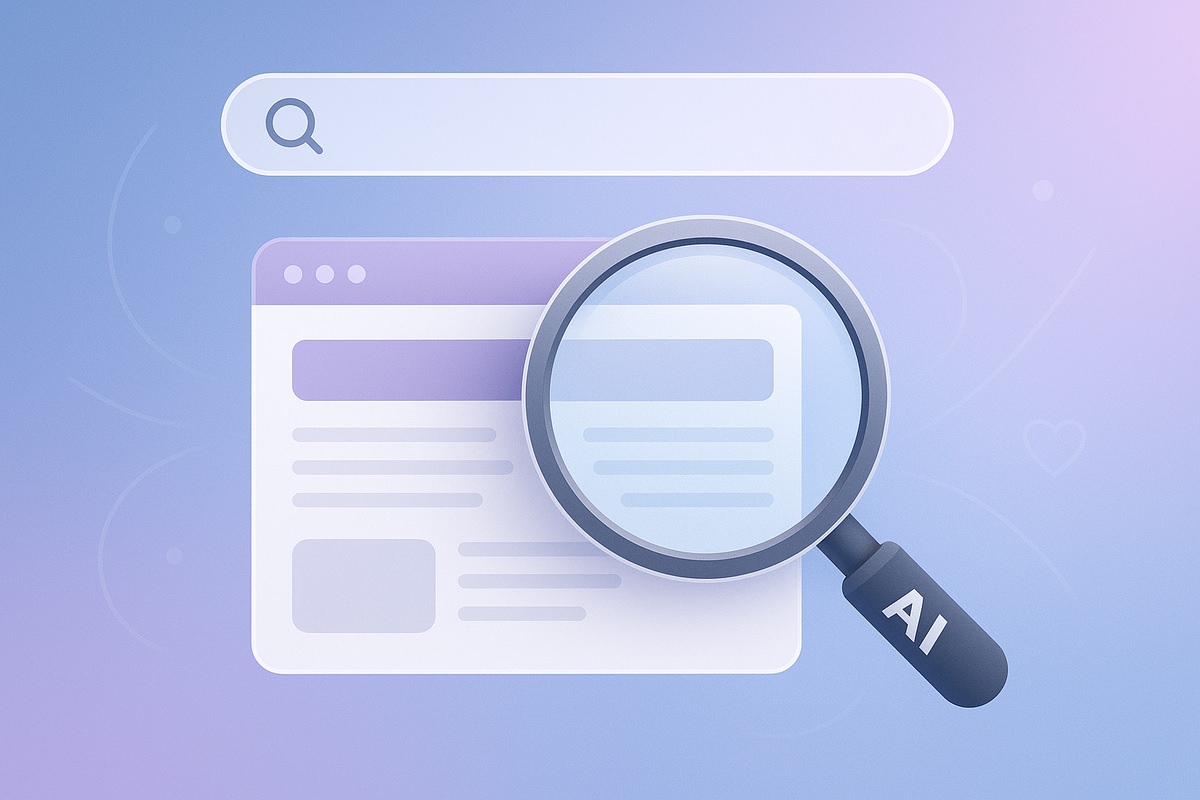
People now ask Google AI Mode, AI Overviews, ChatGPT, Gemini, Claude, Perplexity, and Grok the questions they used to type into a search box. These tools answer in full sentences and cite a handful of sources. Answer engine optimization (AEO) is the work of making your nonprofit’s website one of those sources.
Here is the short version: AEO is still SEO at its core. Google says there are no extra requirements to appear in AI Overviews or AI Mode beyond being indexed and eligible to show a snippet. What earns citations is clear, original, trustworthy content that answers real questions about your mission, programs, and impact. This guide covers what changed in 2026, what to do, what you can skip, and how to measure results.
Understanding the evolution of search and its impact on nonprofits

Traditional search engines such as Google have shaped how organizations think about web content for two decades.
Today, the rapid rise of AI-driven answer engines marks a departure from link-heavy search result pages.
These technology shifts mean that answers to user queries are directly referenced from web pages, knowledge graphs, and organizational schemas.
For nonprofits, this transformation is significant, as it influences how potential supporters, donors, and volunteers interact with your information.
AEO is about positioning your site to appear in these AI-driven answers.
Unlike traditional SEO, which emphasizes ranking for a variety of keywords and phrases, AEO centers on providing structured, comprehensive responses to common questions and topics associated with your mission and organization.
What is AEO (answer engine optimization) and why does it matter to nonprofits?
AEO is the practice of making your nonprofit organization’s website visible and valuable to AI-driven bots and answer engines.
These engines don’t just show people links; they provide instant answers, often sourced directly from top-performing web pages.
If your organization isn’t showing up in these answers, you’re missing a rapidly growing channel for donor engagement, volunteer recruitment, and mission impact.
AEO leverages your nonprofit’s expertise, transparency, and digital trustworthiness.
When your website’s content is well-organized, easy to read, and provides authoritative answers, it’s more likely to be featured by answer engines and LLMs.
→ On Nonprofit Pulse, Courtney De Ronde shares how nonprofit leadership can use insights over instincts to make smarter decisions and drive greater impact.
What changed in AEO in 2026
A lot has shifted since this guide first ran in December 2025. Here is what matters for nonprofit websites:
- AI Mode went mainstream. Google says AI Mode passed one billion monthly users, and Gemini 3.5 Flash became its default model on May 19, 2026. People can now move from an AI Overview straight into an AI Mode conversation (Google, May 2026).
- AI Overviews reach more people than ever. Google reported more than 2.5 billion monthly active users for AI Overviews (Google, June 2026).
- Google published its own AEO guide. Its May 15, 2026 guide to generative AI features says optimizing for AI search “is optimizing for the search experience, and thus still SEO,” and puts unique, non-commodity content first (Google Search Central).
- FAQ rich results are gone. Google stopped showing FAQ rich results on May 7, 2026. FAQs still help readers and AI answers, but the expandable search result is no longer the reward (Google documentation updates).
- llms.txt does not affect Google. Google Search ignores llms.txt files, so keeping one neither helps nor hurts there (Search Engine Land, June 2026).
- ChatGPT now shows ads. Ads started in the US on February 9, 2026, and reached 89 countries by October 21, 2026. OpenAI says ads are labeled, sit apart from answers, and do not influence what ChatGPT says (OpenAI, October 2026).
- You can finally measure it. Search Console added a Generative AI performance report for AI Overviews and AI Mode, available to every site since August 31, 2026, and GA4 added an AI Assistant default channel in May 2026 (Google, Search Engine Journal).
- AI referrals are growing but still small. Across about 101,000 sites, AI platforms sent 0.32% of all website visits from January to April 2026. ChatGPT sent 74.78% of that, followed by Gemini at 11.56%, Perplexity at 7.23%, Copilot at 3.51%, and Claude at 2.62% (SE Ranking, June 2026).
AEO and SEO: stronger together
Google is direct about this: from Google Search’s perspective, optimizing for generative AI search is still SEO.
The same pages that rank well tend to be the pages AI features pull from, because AI Overviews and AI Mode can only link to pages that are indexed and eligible to show a snippet (Google Search Central). If you already invest in good SEO, you are most of the way there. Our guide to SEO for nonprofits covers the basics.
By treating your website as a comprehensive resource for both basic and detailed information related to your mission and organization, you set the stage for improved performance in traditional and AI-driven search.
10 action steps nonprofit leaders should take now

1. Refine topic clusters
Map out the major topics associated with your mission (programs, volunteers, impact, events, board leadership, etc.).
Cluster your content so that related pages reference one another. This helps both users and search engines navigate your resources. If you are planning a redesign, our nonprofit website guide is a good place to start.
2. Deepen your content
Go beyond surface-level answers.
For example, on a donation page, explain not just why giving matters, but also how funds are used, the impact stories behind donations, and stats that show transparency.
3. Create robust FAQ sections
Write down the questions donors, volunteers, and families actually ask you, then answer each one in two to four plain sentences on the page where it belongs: giving questions on your giving page, volunteer questions on your volunteer page. Answer the follow-up questions too.
FAQ markup no longer earns a special result in Google, so write FAQs for people first. If you add FAQPage markup, make sure it matches the visible text exactly.
4. Build offsite authority
Pursue backlink opportunities through guest posts, media features, press releases, and partnerships.
Each link from a reputable source enhances your website’s credibility, which answer engines value.
5. Leverage schema markup
Use structured data where it accurately describes what is on the page: Organization markup with your logo and official profiles, Article markup with a real author and dates on blog posts, and Event markup for in-person events open to the public.
Structured data is not a shortcut into AI answers. Google says there is no special schema needed for AI Overviews or AI Mode, and that structured data must match the visible text. Treat it as accuracy, not a ranking trick.
6. Strengthen internal linking
Connect related content within your site.
For example, your volunteer page should link to your events calendar and impact stories, guiding both users and bots through your materials.
7. Refresh regularly
Review your core pages every quarter, and update them whenever the facts change: program details, impact numbers, staff, and event dates.
Show a visible “Updated” date when you make a real change. Do not change dates just to look fresh; Google’s helpful content guidance calls that out as a warning sign.
8. Prioritize mobile and accessibility
Many visitors access your site from mobile devices.
Ensure all pages are mobile-friendly and accessible to people with disabilities, adhering to WCAG guidelines.
9. Make sure AI crawlers can reach you
An answer engine cannot cite a page it cannot read. Check three things with your web partner:
- Robots.txt: allow OAI-SearchBot if you want to appear in ChatGPT search, and Claude-SearchBot for Claude search. These are separate from the training crawlers (GPTBot and ClaudeBot), so you can allow search while blocking training (OpenAI, Anthropic).
- Your CDN or firewall: bot protection can block these crawlers even when robots.txt allows them.
- Plain HTML: put your key content in the page itself, not only in scripts. Crawlers from OpenAI and Anthropic have been shown not to run JavaScript (Vercel).
Search Console also has a Search generative AI control. Leave it set to include your site unless you have a specific reason to opt out, because opting out removes you from AI Overviews and AI Mode entirely.
10. Publish what only you know
Google’s 2026 guide says unique, first-hand content will likely matter more than any other tactic. A list of generic tips is easy for AI to write itself, so it rarely gets cited.
Your nonprofit has things no one else has: real outcome numbers, the story behind a program, how a dollar is spent, what volunteers do on a Saturday morning. Publish those, with names, dates, and specifics, and you give answer engines a reason to cite you.
→ On Nonprofit Pulse, Karen Alonso shares practical nonprofit event planning tips to make your events meaningful, engage your supporters, and see results beyond dollars and attendance.
What you can skip
Plenty of AEO advice is noise. Google’s own guide lists several things you can ignore, and the evidence elsewhere agrees:
- llms.txt files: fine to keep, but Google Search ignores them, and an Ahrefs study of 137,000 sites found 97% of llms.txt files got zero visits in May 2026.
- Chopping content into tiny chunks: Google says its systems understand pages that cover several topics. Write for readers.
- Rewriting for AI: AI systems understand synonyms, so you do not need every keyword variation.
- Chasing fake mentions: Google says inauthentic mentions are not as helpful as they seem, and its spam policies apply to AI answers too.
- Buying your way into answers: OpenAI says ChatGPT ads do not influence its answers. Paid placement and organic citations are separate.
Measuring success in the new search landscape
It’s more difficult now to attribute visibility solely by traffic numbers, but it’s important to track appearance in AI answer engines and conversions through form fills, donations, and volunteer sign-ups.
Check Search Console’s Generative AI report
It shows how often your pages appeared in AI Overviews and AI Mode, by page, country, and device (Google). It shows impressions only, not clicks or queries, so pair it with your regular performance report.
Use the AI Assistant channel in GA4
Since May 2026, GA4 groups recognized AI referrals, such as ChatGPT, Gemini, and Claude, into their own channel. ChatGPT links usually carry utm_source=chatgpt.com. Some AI visits still show up as Direct, and ChatGPT’s tracking tags went missing from October 8 to 16, 2026 (Profound), so read short-term swings with care. Our GA4 guide for nonprofits covers setup.
Track prompts, not just traffic
Most AI answers never produce a click. Tools like Mentions track whether your organization appears for a set list of questions over time. Set expectations: AI platforms sent about 0.32% of all website visits in early 2026, so citations and visibility are the leading indicator, and donations are the result.
Survey your audience
Ask supporters how they found you.
Add survey questions in your donation or sign-up forms to collect direct feedback.
Analyze conversion paths
Use tools to see which pages or content types convert the most visitors into active donors, volunteers, or subscribers. Regularly review and refine key pathways.
Optimizing for conversion: beyond button placement

Modern conversion optimization isn’t just about attractive buttons or page layout.
It’s about understanding donor intent at various funnel stages, whether someone is looking for impact evidence, transparent financials, or personal stories of change.
Personalize your calls to action
Tailor calls to action based on the visitor's journey.
For example, someone viewing your impact stories might be prompted to “Support This Work Today,” while a returning donor could see “See the Latest Results of Your Giving.”
Clarify next steps
Make sure visitors know what happens after they donate, subscribe, or volunteer.
Send clear confirmation emails and provide links to further information.
Share results
Regularly publish outcome reports and testimonials, showing donors and volunteers the real difference they’re making.
→ On Nonprofit Pulse, Albert Chen shares how nonprofits can leverage AI to streamline operations, enhance donor engagement, and stay mission-focused.
How churches, campaigns, and schools can apply this
The same steps apply across mission-driven organizations. Nonprofits should lead with impact data and transparent financials. Churches should make service times, ministries, and giving questions easy to find and answer. Campaigns should know that OpenAI said ads in its ChatGPT test would not appear near political topics (OpenAI, January 2026), which makes organic visibility the main way to show up there. Schools should answer admissions, program, and giving questions in plain language on the pages families already visit.
The future of nonprofit teams and digital strategy

Your website’s performance in AEO and LLM search isn’t just a technical issue, it’s a strategic opportunity.
Train staff in modern digital marketing, involve leadership in data review, and encourage a culture of innovation.
As AI-powered search grows, so should your team’s capacity to adapt.
If you bring in outside AEO or GEO help, vet it the way you would vet any SEO advice. Google added guidance on evaluating third-party SEO tools and services in June 2026. Be skeptical of guaranteed placement in AI answers, secret files, or tactics built on fake mentions. Most nonprofits get further by training the team they have on the basics in this guide, and the Nonprofit Pulse episode on how nonprofits can start with AI is a practical place to begin.
The fundamentals will future-proof your organization regardless of tech shifts.
By investing in these areas now, your nonprofit will build a foundation for visibility with both humans and AI, amplifying your mission in a rapidly changing web landscape.
Start with the basics, grow your expertise, and monitor results. The future of nonprofit websites is answer-ready.
Ready to make giving as easy to find as your mission? Get started with Anedot.
Frequently Asked Questions
What’s the quickest win for my nonprofit website?
Answer your supporters’ top ten questions clearly on the right pages, link those pages to each other, and make sure search and AI crawlers can reach them. Schema helps accuracy, but it is not a shortcut.
Does traditional SEO still matter?
Yes. Google says AI Overviews and AI Mode rely on the same foundations as regular search, so good SEO is still your cornerstone.
How often should I update our content?
Review core pages every quarter and update them whenever facts change, such as new impact stories, campaign results, and initiatives. Change the visible date only when the content really changed.
How do I measure our appearance in AEO or LLM search?
Use the Generative AI report in Search Console, the AI Assistant channel in GA4, a prompt tracking tool, and a “how did you hear about us” question on your forms.
Should our team hire an AEO specialist?
Not before the basics are in place. If you do bring in help, vet them like any SEO partner and be wary of anyone who guarantees placement in AI answers.
Is schema markup hard to implement?
Most website platforms support it through settings, templates, or plugins. Keep it accurate and matched to the visible text on the page.
Do we need an llms.txt file?
No. Google Search ignores it, and few AI tools read it. It does no harm if you already have one.
Does FAQ schema still matter?
Google stopped showing FAQ rich results in May 2026. Keep FAQs for readers, and keep the markup only if it matches what is on the page.
Do ChatGPT ads change which organizations ChatGPT recommends?
OpenAI says no. Ads are labeled, shown apart from answers, and do not influence responses.
Should we block AI crawlers?
Blocking search crawlers such as OAI-SearchBot or Claude-SearchBot can keep you out of those answers. You can block training crawlers, such as GPTBot and ClaudeBot, separately if you prefer.
What types of content do answer engines prefer?
Clear, comprehensive, and transparent information with well-labeled sections, helpful FAQs, and first-hand details that only your organization can share.
How can we get more media coverage or backlinks?
Actively share successful campaigns with local media and partner organizations. Offer guest posts or expertise to related nonprofits and thought leaders.
80 Community Service Ideas for Nonprofits