The short version: membership nonprofits live or die on perceived value. Gregg Hunter, President and CEO of Christian Camp and Conference Association (CCCA), says that value starts with knowing your members' greatest threats and greatest needs. CCCA serves more than 800 camps and conference centers. Gregg builds strategy from a member survey, holds storytelling to a high standard, and speaks with one voice when the whole field needs it.
Key takeaways
- Use shared purpose to speak with one voice. CCCA's members share a faith based purpose and a unified reason for existing. Gregg says one camp in Maine could speak well for a camp in Southern California about why they do what they do.
- Build strategy on members' greatest threats and needs. CCCA surveys members every three years and draws a fresh top five greatest threats and greatest needs. Gregg builds the strategic plan to meet those needs and address those threats, so members see the value in belonging.
- Set perfection as the standard, with grace. Gregg learned at Boeing that there was no excuse for a lack of perfection. He holds CCCA's magazine, e-newsletter, and other pieces to that standard, and offers grace when the team falls short.
- Tell stories that matter to your audience. If you tell a story that doesn't matter, or tell it in a way that doesn't connect, you lose your audience. Know what they need, then tell the story with the highest quality you can.
- Help remote members belong and connect. Many camps sit far from anyone else, and leaders can feel alone. A national conference, 15 to 20 sectional conferences, and roundtables by discipline give them peers who understand their work.
- Show members real savings. CCCA's food service contract most recently saved members 23% on food costs. For a camp that spends $400,000 a year on food, that is $92,000, and Gregg says it's not hard to convince that member to stay.
- Speak for the field, not for one organization. After the Camp Mystic tragedy in Texas, Gregg spoke with national media for CCCA's members. His message was simple: safety is priority one for camp leaders, and camps are reviewing their own practices.
- Tell stories of changed lives without exploiting pain. CCCA funds camp for kids in foster care and shares their notes, but uses pseudonyms and does not show full pictures. Gregg learned this commitment from International Justice Mission founder Gary Haugen.
- Treat your association as a long haul movement. Gregg sees CCCA as part of a movement, not a trade group chasing the latest thing. Its training is built around core disciplines like marketing, finance and operations, fundraising, leadership, and food service.
- Plan your year like a painting. Decide what picture you want to paint this year, then use more of the colors it needs. Some priorities get more space in some years, without cutting the others out.
- His one-sentence takeaway: Know your target audience's greatest threats and greatest needs, and find a way to address the threats and meet the needs. In doing so, you will prove your worth and your value to them.
Guest: Gregg Hunter, President and CEO, Christian Camp and Conference Association | LinkedIn
Podcast episode transcript ↓
Josh:
Ask someone about a membership organization they belong to, and you might hear, “We belong to them, but they don't really do much.”
Membership nonprofits live or die on perceived value.
That value starts with knowing your members’ greatest threats and greatest needs.
It also depends on the stories you tell. Tell a story that doesn't matter to your members, and you lose them.
Tell one that does, and they see they're part of something bigger than themselves.
So how do you prove your value to members, and tell the stories that keep them coming back?
I'm Josh with Anedot and welcome to Nonprofit Pulse, where we explore trends, insights, and resources that help nonprofits accomplish their mission.
On this episode, we're joined by Gregg Hunter on strategy and storytelling for running a membership nonprofit at scale.
Gregg is the President and CEO at Christian Camp and Conference Association, where since 2009 he has led the organization's strategic direction and strategic plan focused on helping members build sustainable ministries.
Before CCCA, he led communications and fundraising as vice president of public affairs at Georgia Family Council.
His background also includes six years at The Boeing Company, where he helped introduce the 777 airplane to the world, and five years at Young Life as senior communications officer.
A co-author and seasoned speaker, Gregg has worked with media outlets including the Wall Street Journal, USA Today, the New York Times, and Good Morning America.
Hey, Gregg, thanks for joining us on Nonprofit Pulse.
Gregg:
Great to be with you. Josh, thanks.
What one voice means for a membership nonprofit

Josh:
Yeah, excited for our topic today.
One voice for 800+ camps, strategy and storytelling for running a membership nonprofit at scale.
Super interesting topic.
I don't believe we've had this topic explored yet on Nonprofit Pulse, so excited to get going.
Maybe just starting off, Gregg, you lead a membership association serving more than 800 camps and conference centers.
What does one voice actually mean day to day when every member has its own brand, board, and story?
Gregg:
Yeah, I think it's because it's easy to identify one voice, because we all share a common purpose in a faith based association, a faith based group of people.
And their reason for existing is very unified.
So when we speak about the value of camp and the camp experience, the power of camp, it's all very unified.
It truly is one voice and one camp in Maine could speak really well for a camp in Southern California about why do you do what you do?
And it really is one consistent voice across the country.
How member threats and needs shape your strategy

Josh:
Yeah, and your organization CCCA, that's what we're going to call it, CCCA, exists to maximize ministry for members not to run a single camp.
So how do you set strategy when your product is the health of hundreds of independent organizations, ministries?
Gregg:
Well, we've just gone through this in the last couple of days and approved the strategic plan for this year.
And it's not unusual for us to pay attention. Here's the answer to your question.
You have to know what the greatest threats and greatest needs are of your members. And I would say that works for any business or nonprofit.
And so we conduct a survey every three years. We've just gotten those results back.
We have a fresh top five for the greatest threats and the greatest needs of Christian camps across the United States.
Build a strategy to meet the needs and to address the threats, and put yourself in their position as I do.
And I say, if I can just meet those and satisfy and address those things, they will see the value in belonging to the association and truly will help maximize their ministry.
Why quality matters in membership storytelling

Josh:
Yeah. And your background, you really came out of communications and development.
Some organizations, Young Life, Georgia Family Council, even Boeing.
How has that storytelling background shaped how CCCA shows up for members and the public?
Gregg:
Well, so starting with Boeing, one of the key elements there is to commit to quality.
And by that I mean, a lot of ministries, a lot of nonprofits have great stories.
And I'm afraid that over the years, over the decades, sometimes it's acceptable to be an inferior quality.
Well, our members will understand. Our audiences will be forgiving.
We don't have all the money. That's a big one, right?
And I say to my team, we have a magazine and an e-newsletter and other communication pieces.
I said, hey, the standard is very simple.
It's perfection. And I learned that at Boeing because there was no excuse for a lack of perfection.
Now we also believe in grace and we're not perfect. So we know that things will happen.
So there's grace when we're not.
But the standard is perfection in all our storytelling.
And then second, you have to know what matters to your audience. You have to know your target audience.
And if I start to tell a story that doesn't matter, or in a way that doesn't connect, I lose them.
And so knowing the audience, knowing what they need, and then committing to tell the story with the absolute highest levels of quality, that's what I learned throughout my career, still try to employ today.
Josh:
I love that pursuit of excellence.
It's something that's always resonated deeply in me, especially as I've led communications and marketing both inside and outside of nonprofits, ministries, is that pursuit of excellence because the mission does matter.
And we don't have to live in mediocrity if we don't choose to do so.
Gregg:
That's right. Well, and I tell people sometimes that it was actually, driven into me, drilled into me day to day when I started my career at Boeing, because I didn't start with that attention to detail and quality, but it wasn't acceptable.
So for years I worked in an environment where if you make a little mistake, someone's going to find it and it's not okay.
So, that still resides in my brain every time we produce and create.
And when I read and proof things, we're just going to strive for perfection.
The three reasons members renew
Josh:
Yeah. So thinking about membership nonprofits, and really membership nonprofits at scale, they live or die on perceived value.
I mean, how many times have we talked to someone whose organization belonged to a membership organization and said, oh, tell me about this organization.
And they say, well, we belong to them, but they don't really do much, or they do this one thing that has some value or maybe 20 years ago it had value, but it's still going and everyone's paying dues and no one really knows why.
So all that to say, membership organizations live or die on perceived value.
What do camps tell you is the real reason they renew and what almost never really moves the needle for them?
Gregg:
Well, there are really three things that we hear most often.
One of them is a soft concept that I would tell you that when I first came here as president 16 some years ago, I didn't like it because I didn't feel like it was powerful enough to keep members coming back.
But that concept is belonging to something bigger than yourself.
And you see, if you try to sell that, my idea was that's not going to sell.
Come on, Josh, just belong to something bigger than yourself.
But I realized why it means something to Christian camping people and primarily that's because they're located remotely.
They're often out in the woods, far away from anyone else, and they can feel like no one else is doing this stuff I'm doing.
No one else is facing the same challenges.
No one. I'm all alone here.
But as we communicate with them, the stories of their peers from coast to coast, we talk about what we're doing in the big picture with insurance and legislation and contracts with food service providers.
They say, you know what? I'm not alone.
I get to belong to this big thing that's having a big impact. So that's one.
The other one is something I just mentioned.
We have contracts with providers.
We don't currently have an insurance provider that's a preferred provider for us.
But for years we had and we're continuing to pursue it.
We've got a great food service contract though, that if members sign up through CCCA, they can save, most recently, it was 23% on their food costs at camp.
And that camp that just came in spends $400,000 a year on food.
So if you do the math, it's $92,000 a year they'll save.
You tell a member that, you can save $92,000 as a nonprofit this year, it’s not hard to convince them to stay connected.
And then the other, the third piece, the reason that they renew, is you guys just keep providing ways for us to connect.
So to that first point that I mentioned, they can feel all alone.
We've got a fantastic national conference we put on every year at different locations.
Hundreds of people come to that and connect with people who understand them, who get them.
We do the same in regions around the country, there are somewhere between 15 and 20, local, we call them sectional conferences that go on.
If people can get together with colleagues who live and work nearer them.
And then in the last couple of years we've found it's really popular, it's a roundtable discussion.
So by core discipline or function at camp, programming people or marketing people.
We put 3 or 4 on a panel. We give them questions in advance.
They answer those, and then they facilitate the conversation so that those people who are far away from anyone else, they say, man, I wish I could just talk to someone to get a new marketing idea.
How about 40 people? How about 50?
We'll put you on a round table and you can ask and answer questions.
And they benefit from that collaboration with others.
And those are some of the top reasons why we hear people do keep coming back and renewing with us every year.
Josh:
I love that. And it's so clear to of we're having the same problems as camp leaders or we're having the same marketing problems as directors of communications and marketing.
That's so helpful to have that proximity with those other leaders and to talk solutions there.
How to speak with one voice when hard news hits

Josh:
Thinking more about public relations and communications, when negative or heavy news hits the Christian camp space, and member camps look to the association for a response.
How do you speak with one voice without speaking for any one organization in that situation?
Gregg:
Well, the prime example, this won't surprise you.
It happened last year when the tragedy hit at Camp Mystic in Texas on July 4th.
And so you already mentioned my Boeing career.
I got trained in crisis communication and PR at Boeing.
And what I realized very quickly is that this could cause really long lasting damage to the entire movement of camping that I represent.
If somehow people think that camp is not safe.
And so we crafted very simple messaging that we believed if 800 members could communicate this to the media, this is what they would say.
And I got to represent them and speak with one voice to CNN, the Associated Press, New York Times, offering to speak.
And it was the very hot topic in the media.
And when they brought me on, they all asked the question, what do you say is camp safe?
And so I got to speak with one voice.
And a simple message to a communicator like yourself was simply this safety is priority one for camp leaders.
Every camp leader I know and I know hundreds would say safety of campers is priority one, because if they're not safe, they won't be in business very long.
If they build a reputation for not caring for kids and their safety, they won't be in business long.
And then people would ask me what are camps doing about this?
And I would say, well, the ones I'm talking to, they're telling me, so first of all, we're just gut punched and heartbroken because we're imagining what if that happened at my property?
And I know people have been in camping 30, 35 years. I've been around 16, almost 17.
We've never heard of anything like this. None of us.
Because nothing like this, 27 lost lives has never happened that we're aware of.
So what we can say is we are looking into, this is what the members told me, we're looking into our own safety practices.
We're overlaying them on top of what happened at Mystic and say, how would we have weighed up?
How would we have measured up against those things?
And then they're tweaking them where they think there's a need.
So my statement, my assertion is camp is getting safer across the country, even though it was priority one.
It's going to be even safer going forward.
That's how I would say it's my job to speak with one voice representing 800 camp leaders across the country.
Which stories to tell and which to protect
Josh:
Thinking of storytelling Gregg, with millions of people moving through member camps each year, what stories do you deliberately elevate for CCCA?
And which stories do you refuse to turn into marketing?
Gregg:
Yeah. Great question.
So the story of a changed life is just really the simple first answer, because that's why we're there.
It's why camp exists.
And I would say because I know a lot of people in non faith based camps and it's their story too.
They say camp can change a kid's life. We believe it changes the life spiritually.
We believe in the holistic approach, physical, emotional, and spiritual.
So if I can tell the story of a kid whose life was changed, it just goes to proving the value of the experience over and over again.
I had a couple stories I was going to share with you. Just quick notes from a camper.
And I won't share two. I'll share maybe a couple lines of a campers' letter to me.
We have a scholarship effort in which we focus on funding member camps that serve kids in the foster care system because they have a horrible, statistically predicted future.
Any kid who goes through foster care, the stats prove that their future is going to be difficult.
And so we pay for these kids to go to camps. And I get notes like this.
Dear friend, something I liked was doing the log at camp. I don't know what that is.
They think I do.
I used to be scared of it because of all the seaweed, so I didn't want to do it and I am glad I did do it.
There's more that they say, but we say one of the beauties of camp is taking safe risks and accomplishing things you wouldn't do elsewhere.
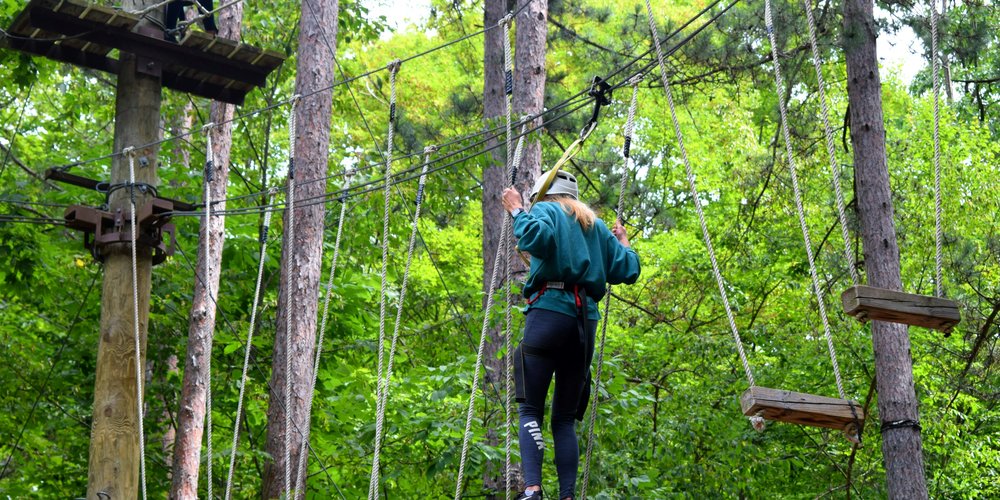
And so whether it's a high ropes course or the log with seaweed around it or a horseback ride, these kids are getting off those events, those challenges and they’re saying, I didn't think I could do it, but I did.
I can do hard things. So those are the kinds of stories.
I love a story from our faith background.
When a kid says, I loved hearing about Jesus, and I made a decision to follow him the rest of my life, I feel like a different person.
Awesome. We're going to tell that story, too.
To answer the second part of your question, even when telling stories like this, and we hear some of the background of the kids in foster care who we scholarship.
They're horrific. The reason why they're in foster care is because both parents are in prison, or one has died.
And I mean, it's horrible and brutal. We don't want to play on people's emotions in that way.
We don't want to exploit someone's pain for our gain.
A little bit of my history, you may not know, is I co-authored a book with the founder of International Justice Mission, Gary Haugen.
And it's a story of rescue from modern day slavery.
Gary taught me this commitment to not exploit someone's pain.
So we can tell stories, and in those cases, we use a pseudonym. We do not use their pictures in their entirety.
We won't identify a person that says, look at all they've been through. I think that's horrible.
I think it's deplorable to exploit someone else's pain or abuse in that way.
And so I learned that from Gary Haugen in that book that we co-wrote.
And so those are the types, though we know some of the backstory, we're not going to share that, unless we could do it in a way that's anonymous completely, and that there's a point in this story besides just the horror of their experience.
Why a membership nonprofit can be a movement, not a trade group

Josh:
As you are familiar, or you may have seen over the years, associations often drift into either a trade group or a movement.
And, those are two totally different expressions.
Where do you draw that line for CCCA and how does that show up in events, training, and your advocacy as you mentioned earlier?
Gregg:
Well, I think we are fairly comfortable and have been for years.
I think I've used the term already, but maybe I haven't. Being a movement.
But it probably differs from, say, a political movement, a social movement.
We will say Christian camping, I'll say to the people gathered at the national conference, you are part of a global movement of God.
A movement of God is a little different from a political or social movement.
And we're all okay with that, right? If God's moving, I'm in.
Let me join Him. I want to go to that thing.
So we will often then refer to our membership or things that are happening, we say that's going to impact the movement, the whole movement.
And so I think I'm differentiating between what you're talking about, between saying, hey, let's just get involved in the latest thing and jump on board that and ride the momentum.
Yeah, that's not us either.
Now, this is a long haul thing, and our movement is connected to what we believe is a movement of God around the world, where we get to focus on that movement here in the US.
How core disciplines shape member training

Josh:
Yeah. And thinking about the training that CCCA offers at times, how does that play into the training?
Is there a lot of reinforcement of that, of just that, the heaviness of what the opportunities are here with Christian camps?
Can you speak to that?
Gregg:
Yeah, sure. The way we build and strategize our training, it's similar to the greatest threats, greatest needs, but we actually identify the core disciplines required across, I'll say it, the movement of Christian camping.
And when we know, for example, we’ll say, well, you need marketing so you can get people to camp.
You need finance and operations. You need fundraising and development.
You need leadership, core leadership. Then there's food service.
You know, those kinds of things.
So we see these are key and core elements, that we believe and know they are all tied into the same purpose, the same big foundational movement that we serve.
But we segmented it. That's how it plays into our training.
We say this is what we know you need, so it's what we're going to deliver.
And we’ve set the number of webinars and articles and seminars at our conference that we're going to deliver annually based on those core disciplines and how we serve across the spectrum of Christian camping.
How to decide what gets airtime in your annual narrative

Josh:
You know, as we mentioned, Gregg, CCCA represents more than 800 camps and conferences.
Running membership at this scale means many competing priorities. I can only imagine.
But let's name a few. Retention, next gen leadership, scholarships, risk, and even growth.
How do you decide what gets airtime in the annual narrative for CCCA and what gets cut and left on the floor?
Gregg:
I think the answer is going to seem to me, maybe it's a little simplistic, but I think it's kind of easy for us.
And I say that because we've just been through the process of re-writing the strategic plan that just got reviewed and approved by the board, and we've elevated certain things because the needs that we identified and the threats that our members feel, and then something to build health and strength in our organization so we can be around for the long haul.
What I equated to when you prioritize that in a plan and what gets in and what doesn't get in, to me it's like painting a picture.
Whether you use oils or watercolor, you say, this year, what do we really want to paint?
And if you say, for example, I want to paint a forest scene, then you're going to use a lot of green and you put a lot of green in that.
For us, if that means an element of membership growth instead of serving the number we serve now we want to serve more.
Or, what do we have to do? We ask ourselves, where do we get the green paint?
What are we going to do with that? It might be the sky is another part of the plan.
The clouds are another part of the plan.
And so we don't have to necessarily scoot one out.
But on some years or in some years, there will be a lot more of one element, a little more of another, a little more of another.
We're weighing it together to see what's going to have the greatest impact to help us complete the mission of maximizing ministry and to help keep us healthy and strong as an association.
One storytelling habit to borrow for your membership nonprofit

Josh:
Thinking of our audience, for leaders building or scaling a membership nonprofit today, what's one storytelling habit and one strategy habit that you'd steal from your own playbook, CCCA’s playbook?
Gregg:
Yeah, so the storytelling, as I mentioned, when you asked me about storytelling a bit ago, the storytelling focus is what's relevant to the member.
And in our case, it's a changed life.
In our case too it's by the millions every year because our members serve millions of campers every year.
And so the storytelling technique there is simply understand what's important to your audience, understand what they're moved by, understand what keeps them in their organization, in their camp.
If it’s a member of ours. And so that's a pretty simple one.
We'll tell stories about kids, then we'll tell stories about camps that are changing kids' lives, and particularly how it might be applied to particular lives.
So whether it's a story about telemedicine that a camp is doing, we've picked that because we say other camps may do that and it may free them up in the way that they hire a medical staff for the summer.
If you can't get an MD on campus all summer long, and that's pretty hard, then where do you get a nurse practitioner who lives in town but will do telemedicine for a kid when they come in with poison ivy or a sprained ankle, and who then decides when to transport a kid into town for further examination?
So what does that mean? Well, it means they get to be more efficient.
It means they save some money. It means that the kids get quick care when they need it.
And it still is life changing to some kids.
Get them back to camp and get them on a horse as soon as they're able. That kind of thing.
Closing thoughts

Josh:
Love that, love that.
Gregg, as we're closing out this episode, any resources you'd like to share with our audience?
Gregg:
Yeah. One of the things that we're really hoping to spread the word on across the country is camps need summer staff.
So as any of your listeners are of the college age, we usually say 18 to 24, that they are looking for a way to spend their summer if they don't want to be stuck on the 33rd floor of an office building, getting someone else's coffee, and they want to instead go to camp and learn a variety of skills, they should look into a job at camp, and we have a website called findacampjob.com.
Or if you're a parent at that age of student, or if you know someone, that's one of the most important resources we have right now to help fill those summer staff jobs and change both camper’s lives and the young person working in those positions.
Josh:
And for those listening, as always, you can head on over to nonprofitpulse.com.
There you'll find show notes and links to Gregg, CCCA, resources mentioned here, and I hope everyone will go and check out the show notes of this episode, especially if you're looking to scale a membership nonprofit.
Connect with Gregg, he would love to help and have a conversation about what your next steps are.
Gregg, last question. My favorite question of every episode.
If you were standing on stage in front of a thousand nonprofit leaders and can share one thing, one sentence about today's topic, what would you say?
Gregg:
Will try to get this in one sentence and not too long, I would say this.
My advice is know your target audience’s greatest threats and greatest needs, and find a way to address the threats and meet the needs. And in doing so, you will prove your worth and your value to them.
Josh:
Love it, love it. And you know, clauses are great.
We can use clauses on there. Gregg, this has been such a great conversation.
Thanks for joining us. And your organization is doing incredible work supporting incredible camps.
And I just want to say I'm so excited for you in this next era.
I know you have a new website coming as well, so thanks again for joining us, and I hope our listeners had many takeaways.
Not just for those who are scaling membership nonprofits, but for other nonprofits as well.
Gregg:
Great. Thanks, Josh.
Great to be with you, I appreciate it.
Josh:
Hey, thanks for listening.
If you enjoyed this conversation, please share or leave us a rating or review wherever you listen to podcasts.
Also, head over to nonprofitpulse.com to sign up for our monthly newsletter, as well as check out all the links and resources in the show notes.
We'll see you next time.
Frequently Asked Questions
What is a membership nonprofit?
A membership nonprofit serves a group of members who join to get shared value, such as training, connection, and savings. Christian Camp and Conference Association is one example. It serves more than 800 Christian camps and conference centers across the United States.
How can a membership nonprofit prove its value to members?
Start by learning your members' greatest threats and greatest needs. CCCA surveys its members every three years and builds a top five list of each. Gregg Hunter says that if you meet those needs and address those threats, members will see the value in belonging.
Why do members renew with a membership association?
Gregg Hunter hears three main reasons. Members want to belong to something bigger than themselves, they save money through provider contracts, and they get ways to connect with peers through conferences and roundtables.
How can an association speak with one voice for its members?
A shared purpose makes one voice possible. In a crisis, Gregg Hunter crafts a simple message that he believes every member would say to the media. He then shares what members are telling him, rather than speaking for any single organization.
How should nonprofits share stories about people who have been through trauma?
Share the change in a person's life, not the details of their pain. CCCA uses pseudonyms, does not show full pictures, and only shares a backstory if it can be fully anonymous and has a point beyond the hardship itself.
What is the difference between a movement and a trade group?
For Gregg Hunter, a movement is a long haul commitment to a shared purpose. He contrasts that with jumping on the latest thing to ride the momentum. CCCA sees Christian camping as part of a global movement of God.
How should a membership nonprofit set priorities each year?
Gregg Hunter compares it to painting a picture. Decide what you want to paint this year, then use more of the colors that picture needs. A priority like membership growth may get more space one year without cutting other priorities out.
Where can I listen to this Nonprofit Pulse episode?
Nonprofit Pulse is a nonprofit podcast from Anedot hosted by Josh Breland. You can listen to this episode with Gregg Hunter on Spotify, Apple Podcasts, and YouTube, and we list every episode with show notes at anedot.com/nonprofit-pulse.
80 Community Service Ideas for Nonprofits