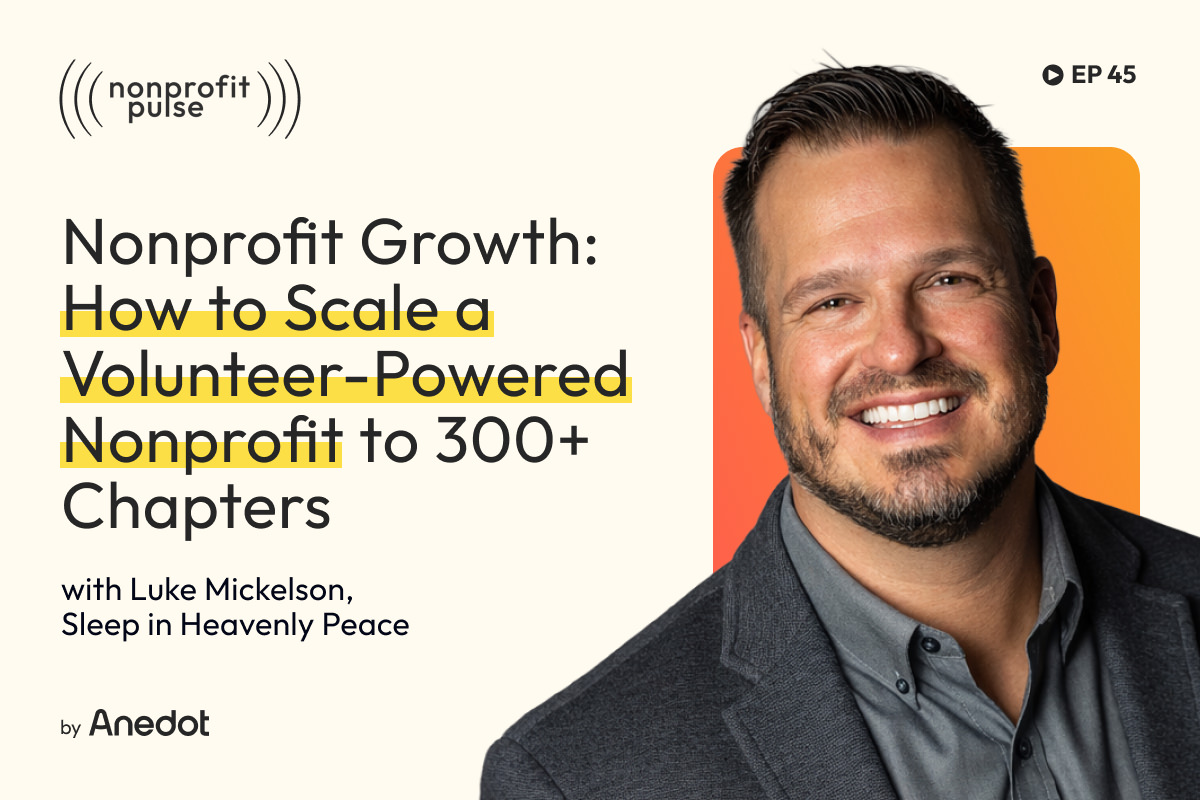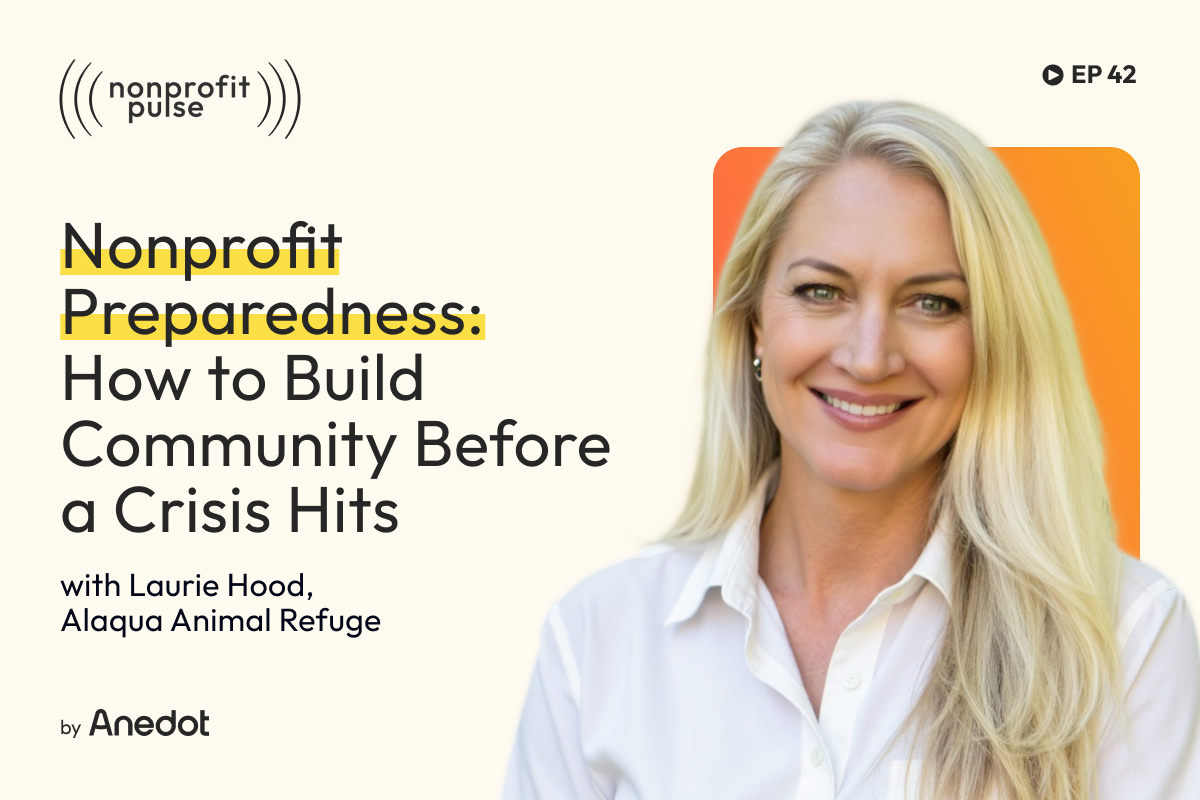
The short version: a nonprofit prepares for a crisis by building relationships when there is no emergency demanding attention. Laurie Hood, Founder of Alaqua Animal Refuge, explains how regular invitations, useful volunteer roles, and reliable coordination with local partners create the trust needed to move quickly when disaster hits. Her Hurricane Milton example shows that a response can come together in less than 24 hours when the community already knows the work and its role in it.
Key takeaways
- Crisis readiness is built in ordinary time. Alaqua treats relationship-building as daily work, keeping an open door for groups to see its work and meet the animals without an urgent ask.
- Consistent storytelling turns awareness into trust. Regular email, social media, and other communications help people understand work they do not see every day and stay connected to the organization.
- A known volunteer base can be deployed by strength. Alaqua has over a thousand volunteers that contribute 80,000 hours a year, allowing the team to assign people to tasks it knows they can handle when help is needed.
- Start with the support already in your backyard. Look for nonprofits, local businesses, civic groups, and individuals already doing meaningful work, then support them and invite them to see your mission.
- Trust comes from showing up without an agenda. A single pitch does not create a durable partnership; people need to see how you treat them, how you treat others, and that you do not only call when you need something.
- Waiting until a crisis creates strain at the worst possible time. A team should not have to build trust, explain its mission, and mobilize support all at once while already under pressure.
- Hurricane Milton showed the value of relationships built years earlier. When a planned intake location fell through, Alaqua had less than 24 hours to organize hundreds of dogs from South Florida, and volunteers immediately found kennels, loaded trucks, and prepared the refuge.
- Coordinate with government and respect the response order. After a hurricane, agencies must first secure unsafe areas and rescue people before animal response teams can enter; nonprofits earn trust by checking in, following the lead, and staying in their lane.
- Keep volunteers engaged through small, meaningful acts of care. Transports, foster placements, and ambassador work move the mission forward between disasters, especially when volunteers can see and celebrate their direct impact.
- Evaluate preparedness after the response, not only before it. Look at response speed, resource mobilization, coordination, and the lessons shared with your team and partner agencies once the crisis is over.
Guest: Laurie Hood, Founder, Alaqua Animal Refuge | LinkedIn
Podcast episode transcript ↓
Josh:
Crisis doesn’t create strong communities. It reveals them.
When disaster strikes, some nonprofits are able to mobilize instantly. Partners show up, resources flow, and systems hold.
Others are left scrambling, trying to build relationships in the middle of chaos.
The difference usually comes down to one thing: what was built before the crisis ever began.
So how do you create that kind of readiness?
What does it look like to invest in relationships when there’s no urgency pushing people together? And how can nonprofits build trust, alignment, and community long before it’s put to the test?
I’m Josh with Anedot, and welcome to Nonprofit Pulse, where we explore trends, insights, and resources that help nonprofits accomplish their mission.
On this episode, we’re joined by Laurie Hood on the topic of how to build community before a crisis hits.
Laurie is the founder of Alaqua Animal Refuge, a nationally recognized no-kill animal sanctuary in Northwest Florida.
For 20 years, Laurie has grown Alaqua’s rescue and rehabilitation services, while advancing animal welfare through legislative advocacy.
She is responsible for building a new model for animal rescue that drives systemic change and protects vulnerable animals across the country.
Her work has been featured in national outlets like People, The Weather Channel, and Nat Geo Wild.
And in 2026 she was honored as a Remarkable Women recipient for her impact and collaboration with law enforcement to address animal cruelty.
Hi, Laurie, thanks for joining us on Nonprofit Pulse.
Laurie:
Thanks for having me.
Josh:
Yeah, excited for our topic today.
We're talking about nonprofit preparedness, how to build community before a crisis hits. And I love this topic.
We were talking just before the show here, and we're both Louisiana natives and are very familiar with storms. You're now in Florida. But very familiar with hurricanes and preparedness.
And, it really just stuck out to me for nonprofits to be thinking about that and the community building and how important that is far before a crisis ever hits.
So excited about the topic.
Build community before a crisis, not after
Josh:
Laurie, many nonprofits, if not most, really shift into that community building mode after a disaster or crisis hits.
And, what does it look like to intentionally build those relationships when there's no urgency driving people together before that crisis?
Laurie:
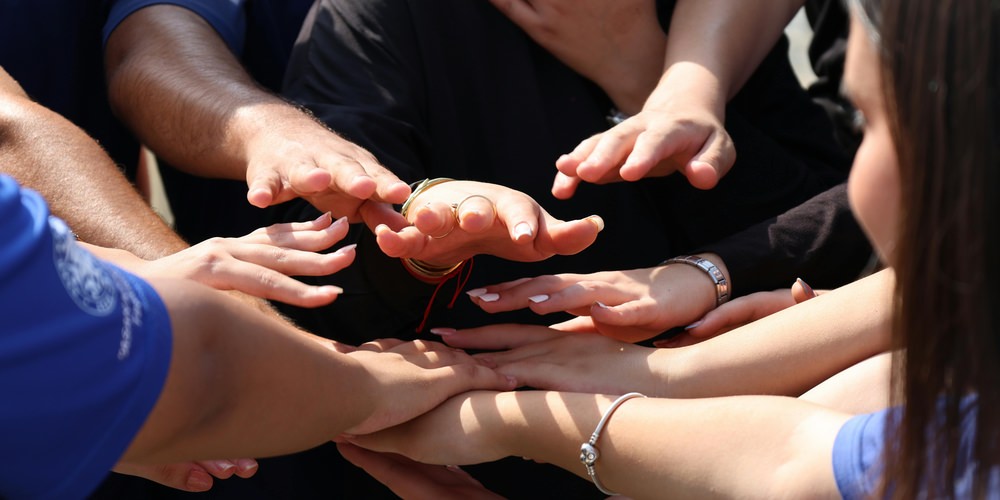
The biggest shift is understanding that relationship building isn’t something that you turn on in a crisis. It's something that we live every single day.
So for us, it looks like constantly inviting people in just to see what we do.
We bring groups out all the time just to see the work that we do, meet the animals, understand everything about our organization.
So there's no urgency or pressure. We just have an open door. And at the same time, we always make sure that we're telling our story.
Nonprofits do such good work. And I think they forget that not everyone lives what we live every single day.
So through email and social media and all kinds of different communications, we keep people connected to us, day by day.
Over time, that builds something so much more deeper than awareness. It builds trust.
So some of those people become volunteers. And today Alaqua has over a thousand volunteers that contribute 80,000 hours a year. I mean, it's just insane.
Josh:
That's awesome.
Laurie:
Yeah. So when a disaster does happen and we call out for help, we're not just introducing ourselves during that moment.
We know who the volunteers are. We know their strengths.
And we can quickly assign them to tasks that we know that they can handle.
Josh:
I love that and even able to communicate before the crisis hits too, like, hey, we're at risk for XYZ.
We're going ahead and getting signups for those who are staying put, who could help? You know all of that.
Laurie:
We sign up for everything.
Foster homes, if we have to personally evacuate, it's a whole different process than if we're stepping in as someone that's going to help other people in the path of the storm.
Identify the right community stakeholders before disaster strikes

Josh:
Yeah. So thinking about kind of a tactical question, what's the how here?
How do you identify the right community stakeholders and local partners to connect with before a crisis?
And also, how do you earn their trust when there is no immediate need on the table?
I can imagine approaching some local leaders, about your mission and they're like, yeah, well, we've got too much stuff right in front of our face right now to think about, helping on a potential disaster, one that's not here.
What would you say to that?
Laurie:
I think it starts with recognizing what support you already have.
Because you'd be surprised what is already right in your own backyard.
We look for people in organizations that are already doing meaningful work for the community.
Whether it's nonprofits or local businesses that have supported us or civic groups or even just individuals who deeply care about our mission.
And then, we show up without an agenda with them. So we support their work. We invite them to see ours. We take time to build that relationship.
Trust doesn’t come from a single pitch. It comes from consistency and it comes from people seeing your work over time, seeing how you treat them, seeing how you treat others, and knowing that you're not only reaching out when you need something.
So I think that's key. So many people just reach out only when there's an urgent situation.
And instead, if you reach out when it's not urgent, I think it builds that trust.
Josh:
Yes. So if you were starting over today, how would you build that list of people to go ahead and reach out to and make that first connection?
Would you look kind of across segments of government, kind of affinity orgs in your area?
How would you build that if you were going from 0 to 1 right now?
Laurie:
I think I would just pay attention to the community and see who already is engaged, and try to introduce myself to them.
When I first started out, I spoke at anything that anyone would invite me to.
I did more rotary club speaks and go into schools and engaging with the local politicians because they have connections and they connect you to the government agencies that can help you do your work too.
So just a lot of shaking hands. It's almost like you're on a campaign of your own, right?
You're walking around and introducing them to what your goal is and what your organization means and it just grows from there.
→ Learn how nonprofit leaders can design nonprofit ambassador programs that build trust, avoid transactional pitfalls, and prevent burnout, with Tasha Van Vlack from The Nonprofit Hive!
Making room for readiness when your team is maxed out

Josh:
So a lot of nonprofit leaders would say they don't have the bandwidth to invest in preparedness, especially when they're already stretched thin serving the needs of what's right in front of them, today and tomorrow and next week.
How do you make that case internally that a pre-crisis relationship deserves time and resources now?
Laurie:
Well, Josh, that struggle is real. It truly is.
Many people in our organization are just burned out from the beginning of the day to the end of the day. It's nonstop.
So I think for me, the way to make the case internally is to help people see that this isn't taking away from our mission.
This is what allows us to sustain the mission, especially when things get hard.
And so if you explain to them that if you wait for a crisis to build these relationships, you're just creating more strain in the most stressful moment possible, right?
So you're asking people who are already stretched so thin to build trust and then explain your mission and mobilize support all at once.
And it is incredibly hard to do well.
Calm-season relationships that reshape crisis response
Josh:
So thinking of examples, Laurie, can you walk us through a specific example where community relationships that you built during a calm period directly changed the outcome when a crisis eventually hit?
Laurie:
Yes. So a great example of this was Hurricane Milton.
So Hurricane Milton was not directly we were not in the path of danger there. It was down in South Florida, long before that storm ever even formed.
We built relationships at not only the local, but the national level. So we are part of a statewide coalition that focuses on disaster response.
And we made those connections from years of attending conferences and training and just staying engaged with others doing this work.
As the storm approached, shelters across the whole United States began to have these calls, and the calls kind of got narrowed down to just key shelters in Florida that were in need and could offer help.
So at the very last minute, the way it works is that we decide who's in harm's way, right?
We want to get the animals out of the shelters in those areas so they're empty and the animals are safe.
And then after the storm, they have space to bring in animals that are found so their owners can find them.
So it's a big organization part to that and you don't want to take animals out of an area and they may have owners looking for them already.
So these animals are already living in the shelters. They're already able to be relocated.
And the states jump in and tries to get them to one centralized location so they can arrange for a transport across the United States.
At the very last minute, the shelter that was able to do this intake was not able to.
So Alaqua stepped in. We had less than 24 hours, Josh to organize hundreds of dogs coming in from South Florida.
And, it was amazing. So that's where the community piece came in. We put out a call for help.
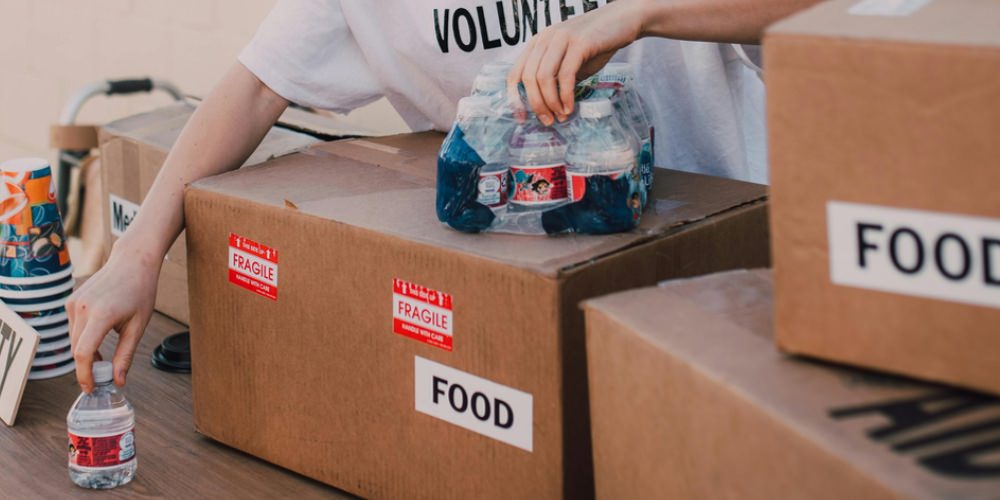
People showed up immediately. Volunteers drove all across the southeast United States to pick up kennels when we ran out of resources locally.
Others were at the refuge already and loading trucks and assembling everything that came in.
And it was funny because it honestly looked more like a festival than a crisis response.
People were bringing food and water and supplies, and they were doing it not only for the animals, but for each other.
So this all of a sudden created this sense of purpose and energy that you just can't manufacture.
So within 24 hours, we were fully set up. The dogs arrived, they came into a safe organized environment.
And you just can't replicate that. And that doesn't happen when you're building relationships for the first time, right?
It only happens when those relationships have been built and nurtured and trusted long before the crisis ever begins.
→ Learn how leaders can approach nonprofit mergers thoughtfully, navigate the challenges involved, and decide when joining forces can actually strengthen their mission, with Debra Hertz from The Strategy Group!
A nonprofit’s seat at the local emergency planning table

Josh:
I love that. That's incredible.
You mentioned the government piece, and that's where I want to go next.
Thinking about how should nonprofits play a role in local emergency and crisis preparedness planning, and how do you get that seat at the table alongside local government agencies and first responders?
Laurie:
Well, it's very important, and it's probably the most important part of this whole puzzle when you're looking at a natural disaster.
So what may feel like help in the moment can actually create more risk, if it's not coordinated properly.
I think one of the most important things for nonprofits to understand is that in a crisis, everyone has a role, and respecting those roles is critical.
Government agencies are responsible for safety and structure and after something like a hurricane, there's a very specific order of response.
First they have to secure the area, there's down power lines, there's unsafe roads, there's all of that.
When agencies go in to rescue people following that, only after that is it safe for animal response teams like us to come in.
It can be so hard to wait. And especially when you know animals are out there too.
But it can interfere with putting more lives at risk. So that's where the preparedness part comes in.
It's important to build relationships with those agencies before the disaster ever even happens.
And when crisis does hit, check in, follow their lead, stay in your lane, right?
You've got to stay in your lane, because that's what builds respect for the process.
Once they gain your trust and know that you're able to do more and help more, that shift happens when you become a resource for them.
And I love that. I love when they reach out to you and they know that you're going to do it the right way and that's when I feel like your nonprofit is truly a success because you’ve gained that trust from those government organizations.
Josh:
Yeah, I love that. And even thinking about planning what crisis.
Let's say natural disasters is one area.
Planning that out with your local government and saying, hey, I know we have threat of hurricanes every fall during hurricane season, I know we have threat of wildfires.
I know we have threat of if you're in a big industrial or chemical area.
I'm thinking south Louisiana, south Texas. You've got that going on as well.
Being able to talk with local agencies and say, hey, we want to plug in to your disaster plan, your preparedness plan as part of it.
We know it's going to be a whole of government approach on your part. We want to step in and be a part of that as well.
Laurie:
Well, and you can't push your way in.
You have to show up constantly and understand the structure and be part of their team.
And I think when you prove that you're a reliable partner to them, and that's what really matters the most, and that's really how you make the most change.
Ways to keep volunteers engaged between crises

Josh:
So Laurie, thinking about the volunteer and supporter side of this.
When you're building community before a crisis, how do you keep those folks engaged over long stretches where nothing urgent is happening and really, the mission can feel abstract?
So thinking of places in the United States that are under threat of hurricanes.
Well, there's some areas that it's really only only a threat every 8 to 10 years, they're not known for getting a lot of direct hits or having a lot of effect.
How do you still keep those volunteers and supporters engaged?
Laurie:
Well, I think that it all starts in how you define a crisis.
Not every single moment has to be a major disaster to matter.
So at Alaqua, there's small moments every single day that moves our mission forward. And that can be a transport.
That could be a foster placement, that can be someone being an ambassador for us and going out and spreading the word.
So all of those are simple acts of care. So they're meaningful and we treat them that way.
We make a point to share these moments with them. We celebrate with them. We bring the volunteers in and let them see the direct impact of what they're doing.
And for them, they can embrace the mission after that and feel like it's real for them and keep going.
It just made me think. Yesterday we had a group come out and it was a senior living home, and one of the ladies in the home had been a part of Alaqua since the very beginning, actually 20 years.
And now she's in a nursing home. She's in a wheelchair.
And she just looked at me and she said, thank you for allowing us to come out for this tour today, because all of us just want to have a purpose.
We all want to know that what we're doing matters.
I think that's across the board, it's an innate thing for humans to want to think that they're needed and that their lives have purposes.
So we latch on to that, we bring them into our family.
And they do feel like that everything that they're doing for us makes their life purposeful.
→ Explore the world of volunteerism: its history, importance, types, and strategies to inspire effective community service and personal growth in our comprehensive guide.
Pitfalls when you activate community only in an emergency

Josh:
So thinking about mistakes, Laurie, what common mistakes do you see nonprofits make when they try to activate a community network during a crisis that they didn't invest in beforehand?
Laurie:
Well, I think the biggest mistake is assuming that good intentions are enough.
In a crisis, people always want to help. And that's a beautiful thing. But without direction and coordination, that energy actually can create more harm than good.
So we've seen situations where too many people show up at once. There's no clear plan.
Resources are duplicated and then some areas completely missed. So it can slow things down.
And in some cases it just can actually create safety risk. So I feel like another mistake is trying to build the network in the moment, right?
You can't bring people in that don't already understand your organization, what your role is, how to plug in, and it just can get chaotic very quickly. That's why preparation matters so much. If you've already built relationships and have established systems, you can channel that goodwill in a way that's organized, safe, and truly effective.
Josh:
Yeah. And I could see how that could be a major brand and reputation issue as well when many folks in your local community, their first introduction is a messy, crowded, church parking lot where it's just chaos.
You've got volunteer leaders who are not doing their best work.
They may be overwhelmed. And that's the first impression that some folks in your community are getting to your organization.
Laurie:
Yeah. So that's not good for anybody, right?
We want to be seen as the people that are able to to have the answers to the problems, not be the problem.
What impact looks like in a well-prepared nonprofit

Josh:
So thinking about measuring the impact, how should a nonprofit think about measuring the impact of preparedness work when the whole point is preventing or reducing harm that hasn't happened yet?
Laurie:
That's a tricky one. When I read this question, I thought about it.
And I think you have to look at preparedness maybe a little bit differently.
Because it's not something that you can measure of ahead of time. It's something that you're only able to do when the moment comes.
So for us, impact shows up how quickly we can respond, how coordinated we feel like we are.
It doesn't happen without preparation. I think you can look at how many people show up when you call, how quickly the resources come together, how smooth the efforts run.
All those indicators show preparedness work is working, but I also think it's important that the work doesn’t end when the crisis is over.
So that’s when you take the time to follow up, you look at the team and agencies that you worked alongside of, you measure what went well, where you struggled, where you can improve.
I feel like the more you do that, the better you are the next time something like this comes around.
→ Learn why video storytelling for nonprofits works, how to do it well, and how to stay authentic on a budget with Pat Taggart from SkyBlue Creative!
A simple first step toward real crisis readiness

Josh:
So for a nonprofit leader listening right now who knows their community is vulnerable but really hasn't started this kind of proactive work yet.
What's the first concrete step they should take this week?
Laurie:
I think it's just to start. It doesn't have to be a big plan or a full strategy.
It can be one phone call this week. It can be reaching out to another organization that does similar work and ask them what they already have in place.
I don't think you need to reinvent protocols or create everything from scratch.
Most people like us, we're willing to share, and I think that saves you time and energy.
And, I love being able to share what we've learned and give that information to other people who are just starting out.
I think you can also call your local government or your emergency management offices and introduce yourself.
Let them know that you're there and what you do. And I think you just keep going and do a little bit each day.
Josh:
And depending on the size of your local government, they may have some great programs or infrastructure there for liaisons to really liaise amongst the nonprofit providers in the area too.
So it could be a lot easier for some locations to start doing this, more so than others that may be in kind of small areas or rural areas.
Laurie:
And, you can't forget that sometimes there's grants for this.
There's government money that wants to make sure that their communities are prepared.
So, that's a little bonus to that. And either they come in and maybe they do training at your location and you get to know everyone that way.
And there's some government money for that. So it's a win win for everybody when that happens.
Closing thoughts

Josh:
Laurie, any resources you'd like to share with our audience on today's topic?
Laurie:
Well, we are living in today's time, right?
So AI is an amazing resource that I think, shameless, shamefully, or shamelessly, whatever you want to say, use every single day. I love AI.
I went to a conference one time about a year ago, and there was an entire segment on AI and how to use it, and they said something that is stuck with me for a long time.
They said, you need to use AI as an intern. Pretend like it's your intern, ask it questions. Take what you get back from it and use that as a starting point.
And before this call, I just was curious to see what would happen.
I typed in and I asked for an emergency management plan for my organization based on what they knew our resources were and what other community partners I should reach out to make my plan successful.
And I was blown away. I mean, it gives you names and numbers and websites.
So I think, it's right there at our fingertips. So I feel like you should use it.
Josh:
Absolutely, absolutely.
We've had one episode on AI for nonprofits and how nonprofits should leverage AI.
We're going to have many more, just the space right now is moving so fast.
So it's unbelievable. But I think even though the speed of kind of the AI industry is moving fast, everyone should be at least using it daily to learn, right?
To learn about their mission, to learn about those that are serving, to ask opportunities that they may be missing in their area. So absolutely.
So last question. My favorite question of every episode.
If you were standing on stage in front of a thousand nonprofit leaders and can share one thing with them, one sentence, short, pithy sentence, what would you say?
Laurie:
Don't wait until you need your community to start building it.
Josh:
Absolutely love it, love it.
Laurie, this has been so helpful.
I hope our audience will take at least a first step or maybe, they're further down the road and can just revise or make it even better.
But being prepared for crisis as a local nonprofit serving your community is so important.
And I think there's a lot of listeners out there who, they've had crises in their area before and they haven't been able to step up and serve because of a lack of planning and preparedness.
I think you've convinced me and hopefully many others that, no, this is for you, you can do it, and just get started.
Laurie:
Absolutely.
Josh:
Awesome. Laurie, thanks again.
And as always, check out the show notes at Nonprofitpulse.com.
There you can connect with Laurie. She's an expert on this, so please connect with her.
And you can also find show notes, resources, and other episodes.
Laurie, thanks again, and love your organization.
Love the impact you're having. And I wish you many, many more years of success.
Laurie:
Thank you. Appreciate you.
Josh:
Hey, thanks for listening.
If you enjoyed this conversation, please share or leave us a rating and review wherever you listen to podcasts.
Also, head on over to Nonprofitpulse.com to sign up for our monthly newsletter, as well as check out all the links and resources in the show notes. We’ll see you next time.
Frequently Asked Questions
How can a nonprofit build community before a crisis?
Make relationship-building part of everyday operations, not something that starts with an emergency appeal. At Alaqua Animal Refuge, groups are invited to see the work, meet the animals, and stay connected through regular communications. Those low-pressure interactions build trust before the organization needs to ask for help.
Which local partners should a nonprofit meet before a disaster?
Start with people and organizations already doing meaningful work in your community. Laurie Hood recommends looking at nonprofits, local businesses, civic groups, and individuals who care about your mission, then supporting their work and inviting them to see yours. She also built connections by speaking to Rotary clubs, schools, and local politicians who could connect her with government agencies.
How do animal rescue nonprofits prepare volunteers for a hurricane?
Build a volunteer base before hurricane season and learn what each person can do when a need arises. Alaqua keeps people involved through roles such as fostering, transport, and ambassador work, so the organization knows volunteers' strengths when it needs to assign tasks quickly. Its over a thousand volunteers contribute 80,000 hours a year.
How should a nonprofit work with emergency management before a disaster?
Introduce your organization to local government and emergency management offices before a disaster, then learn the structure and respect each agency's role. Hood says nonprofits should not push their way in during a response: they should check in, follow the agencies' lead, and stay within the part of the response they are equipped to handle. Reliable participation over time can make the nonprofit a trusted resource.
How do nonprofits keep volunteers involved between disasters?
Give volunteers meaningful ways to advance the mission during ordinary days, not only after a major disaster. Alaqua treats transports, foster placements, and ambassador outreach as important acts of care, then shares and celebrates the direct impact with volunteers. That helps supporters see a purpose in their involvement and remain connected.
What goes wrong when volunteers are activated only during a crisis?
Good intentions can create confusion if volunteers have no direction, plan, or prior understanding of the organization. Hood has seen too many people arrive at once, duplicated resources, missed needs, and safety risks. A pre-existing network and clear systems help a nonprofit channel the same willingness to help into organized work.
How can a nonprofit measure crisis preparedness?
Assess preparedness through the response itself: how quickly people mobilize, how fast resources come together, and how coordinated the work feels. After the crisis, review the response with your team and the agencies involved to identify what worked, where the organization struggled, and what to improve next time. Hood describes that follow-up as part of the preparedness work, not an afterthought.
80 Community Service Ideas for Nonprofits