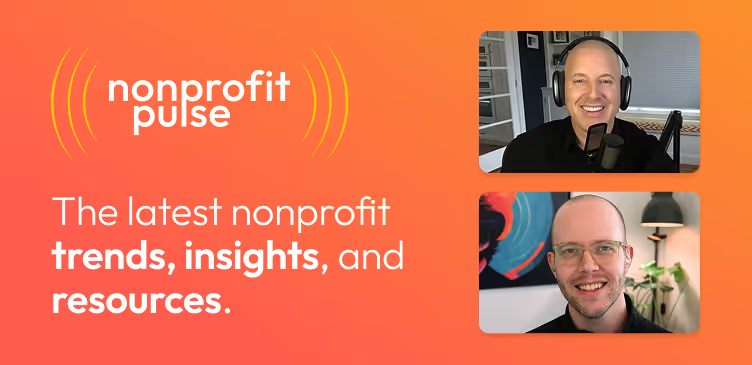
In March 2023, we published the first episode of Nonprofit Pulse, a conversation with Nathan Hill of NextAfter about how nonprofits can begin to innovate.
Fifty episodes later, we have talked with fundraisers, executive directors, board leaders, consultants, counselors, and founders about the work of running a mission-driven organization.
Those conversations covered a lot of ground. Donor retention. Monthly giving. Bylaws. Hurricanes. Mergers. AI. Burnout.
But the same handful of ideas kept coming back, no matter who was in the guest chair.
This post collects them: 10 nonprofit best practices from 50 episodes, with links to the conversations where each one came from.
If you are new to the show, this is a good place to start.
If you have been listening since season one, thank you. Here is what we learned together.
What is Nonprofit Pulse?
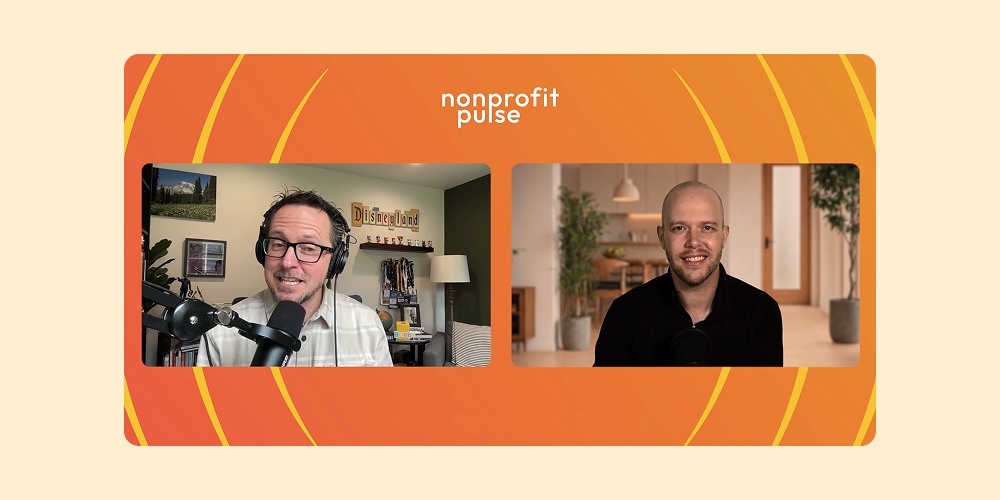
Nonprofit Pulse is a nonprofit podcast from Anedot, hosted by Josh Breland, Anedot's Head of Marketing, and produced by Joseph Hur, Anedot's Marketing Manager.
Each episode is a conversation with a nonprofit leader or expert about one practical topic, such as donor retention, recurring giving, board development, branding, AI, or leadership.
The show launched in March 2023 and published its 50th episode on September 30, 2026.
It is available on Spotify, Apple Podcasts, and YouTube, with every episode listed on the Nonprofit Pulse page.
Nonprofit Pulse by the numbers
- 50 episodes across 4 seasons, from March 8, 2023 to September 30, 2026
- 50+ guests from organizations including Big Brothers Big Sisters of Southwest Louisiana, Cradles to Crayons, Playworks, United Way of Southern Nevada, Childhelp, and Sleep in Heavenly Peace
- More than 33,000 plays and counting
1. Donor retention is decided after the gift

The takeaway: most donors who stop giving leave because of what happens after they give, not because of the ask.
James Misner of The Kipos Group told us that recurring donors usually stop for one of three reasons, and two of them come down to what an organization does after the gift.
Donors leave when they do not know they made a difference, or when they do not realize their gift lapsed. His fix is an experience built around appreciation, stories, and early signals of a lapse.
One detail stuck with us: a physical welcome packet can stay in a donor's home for four to six months, long after an email has fallen down the inbox (Donor Retention: How to Maximize Donor Retention).
Nathan Hill opened the very first episode with the same problem from a different angle. With new-donor retention around 23% and overall retention in the 40s, he argued that teams need to test beyond the usual advice.
His low-cost starting point is a $20 mystery donor audit: give to your own organization and see what a donor actually experiences (Nonprofit Innovation: How Nonprofits Can Begin to Innovate).
Try this: make a gift to your own organization this week. Write down every touchpoint you receive in the next 30 days, and how long it takes for a human to say thank you.
2. Treat recurring giving as a discipline, not a checkbox

The takeaway: monthly donors retain far better than one-time donors, but a recurring program only grows when someone owns it.
Stephen King of GrowthForce shared the numbers that make the case: monthly donors retain at about 80% in the first year, compared with 41% across all donors.
Donors who have given monthly for five years have a 95% retention rate, compared with 23% for one-time givers. He also pointed out that only 14% of nonprofits prompt a donor to give monthly during the first gift (Nonprofit Sustainer Programs).
Dave Raley of The Center for Sustainable Giving explained why so many programs still plateau.
Recurring giving does not grow on "technology pixie dust." It stalls when nobody owns it or donors have no reason to stay. He also separated voluntary churn from involuntary churn, noting that 20 to 25% of cards go bad each year (Recurring Giving: Why Most Programs Plateau).
Christina Tzavaras Edwards of Splendid Consulting showed what focus can do: one organization used recurring-giving sprint campaigns to grow from 12 to 120 recurring donors (Fundraising Engines).
Try this: assign one person to own your monthly giving program, and offer the monthly option on the first gift, not only in a later appeal. If you are reviewing your donation forms, our guides to building a monthly giving program and recurring giving walk through the setup, and Anedot's recurring giving tools handle frequency options and card updates.
3. Plan fewer things, and actually work the plan

The takeaway: a useful fundraising plan is a short list of decisions about what you will and will not do.
Krissie Kelleher of Team IMPACT put it plainly: an annual fundraising plan is not a document. It is a decision. She starts with three to five core revenue drivers, notes that 70 to 80% of revenue is often predictable, and maps the work across a 12-month calendar (Annual Nonprofit Fundraising Plan).
Katie Lord made the same case years earlier with her rule of three: no more than three tactics. She argues that adding a fourth task makes the brain shut down. She also favors a one-year plan, since January's assumptions can be obsolete by March (Development Planning).
Christina Tzavaras Edwards added a warning about betting the budget on one big event. She is not anti-event, but she prefers a fundraising engine of repeatable campaigns that compound over time. Her clients have raised $20K in 20 days and $10K in 10 days with focused sprint campaigns (Fundraising Engines).
Try this: list every fundraising activity from last year. Circle the three to five that produced most of your revenue. Shrink or cut one of the rest.
4. Diversify revenue and build reserves before you need them

The takeaway: concentration is a risk, and cash reserves buy you time to make good decisions.
Ciara Byrne of Green Our Planet lost half of her annual budget within a month in 2020 as funders redirected money. Instead of abandoning the mission, she monetized the expertise her team had already built, and the organization grew from ten Las Vegas schools to more than 1,200 schools in 43 states (Nonprofit Funding: Build Diverse Revenue Streams).
Stephanie Skryzowski of 100 Degrees Consulting flagged the warning sign to look for: when about 75% of revenue comes from one government source, you have a serious concentration risk. She recommends a surplus budget that builds a three- to six-month cash reserve, and a three- to five-year forecast that can reveal a funding gap early (Nonprofit Finance: Current Trends and Best Practices).
Erin Davison learned this the hard way. When Hurricane Laura devastated the building of Big Brothers Big Sisters of Southwest Louisiana in 2020, her first two principles were simple: cash is king, and do not give in to fear. She makes the case for a reserve fund of at least 10 months of operating funds (Nonprofit Leadership: How to Overcome Adversity).
Try this: calculate what percentage of last year's revenue came from your single largest source. If it is more than half, put a second revenue stream on this year's plan.
5. Your brand is your reputation, and stories are how people remember it

The takeaway: nonprofit branding is not a logo exercise. It is what people say about you, and stories are how they learn to say it.
Mark Miller of Historic Agency defined brand as what people say about an organization when it leaves the room (Donor Cultivation: A Brand-First Strategy).
Howard Adam Levy of Red Rooster Group called it reputation: what you say you do, how effectively you do it, and the perception people carry away (Nonprofit Branding: How to Build a Strong Brand).
Lyn Wineman of KidGlov warned against jumping straight to a new name, tagline, or font. Five of her eight brand-framework steps are strategy, not creative, and she sees about a 30% marketing-time efficiency when an organization has a strong brand (Nonprofit Branding: Why a Tangled Brand Could Be Holding You Back).
On storytelling, Nathan Young of StoryCulture Consulting urged nonprofits to stop searching for the one emotional story that sells and keep sharing many stories that make the work recognizable over time (Nonprofit Leadership: How Storytelling Builds Leaders).
Pat Taggart of SkyBlue Creative made it practical: a cell phone, tripod, light, and microphone can cost about $100 all in, and people want honesty, not perfection (Video Storytelling for Nonprofits).
Try this: open your next staff meeting with a two-minute story from the field. Record it on a phone.
6. Data only matters if people use it

The takeaway: most nonprofits collect plenty of data. The gap is turning it into decisions.
Tim Lockie of The Human Stack shared a striking estimate: 90% of organizations collect data, but only 5% use it to make decisions. Digital transformation fails when teams buy technology without teaching people how to use it, like buying a car without driver's education (Digital Transformation).
Stephen Minix of UpMetrics said an annual report that says everything worked is validation, not learning. Impact measurement works when teams decide what success means and can see themselves in the process (Nonprofit Data: Impact Measurement).
Our 50th episode brought the point down to the most basic level. Amberlee Burrows of Bearing Tree explained that gift processing is not just administrative work. Missing contact details, duplicate records, and delayed gift entry lead to returned mail, inaccurate receipts, and asks based on an incomplete view of a donor (Nonprofit Data Strategy).
Courtney De Ronde of Forge Financial and Management Consulting summed up why it matters: hope is a great virtue, but not a wonderful strategy (Nonprofit Leadership: Insights Over Instincts).
Try this: pick one decision you will make this quarter. Name the one or two numbers that should inform it, and check whether your team can pull them today.
7. Start small with AI, and start with what you already have

The takeaway: the best first AI projects are small, personal, and checked by a human.
Albert Chen of Anago described generative AI as smart autocomplete, not a substitute for human judgment. The most immediate use cases are personal: research, drafting, and critiquing work that already takes up a team member's time. His rule is to give the tool grounded source material and check the output before it goes out (AI for Nonprofits).
Erica Cox of Provisio Partners pushed back on the idea that you must clean all your data first. She recommends small, controlled use cases inside a recurring process, using the minimum viable data the job requires (Nonprofit AI: How to Start).
Stewart Severino of The Navigators offered a useful guardrail: innovation is not AI, and AI is not innovation. Start with what your audience actually needs, then decide whether a tool helps (Nonprofit Innovation as a Discipline).
Try this: choose one weekly task, such as drafting a thank-you email or summarizing a report, and test an AI tool on it for a month with a human review step.
8. Partnerships start with the outcome, not the check

The takeaway: the right partnership form depends on the goal, and the best partners are built through relationships long before you need them.
Michelle Shumate of the Network for Nonprofit and Social Impact has studied nonprofit collaboration for 20 years. In her research, shared services delivered efficiency, integrated organizations paid off for program growth and innovation, and alliances worked best for policy and system-level wins (Sustainable Nonprofit Collaboration).
Lynn Margherio of Cradles to Crayons asks how a business can help before it writes a check, and has watched a two-hour volunteer shift grow into board participation and skills-based work (Corporate Partnerships Beyond Money).
Mark Lillis of Leaven Kids keeps more than 90% of his partnerships through continuous communication and hundreds of handwritten thank-you notes each month (Community Collaboration).
Later guests extended the idea. Debra Hertz of The Strategy Group described how a merger can make one plus one equal five, but only with shared vision and values, because cultures do not simply merge (Nonprofit Mergers).
Lindsay Whorton of The Holdsworth Center said nonprofit-public partnerships work best when nonprofits support a public system's goals rather than trying to shape its decisions (Nonprofit Public Partnerships).
Michael Medoro of Childhelp explained how coalitions reduce duplication and pool scarce resources when partners stay clear about what they can and cannot do (Nonprofit Coalition Building).
Laurie Hood of Alaqua Animal Refuge showed why it matters: when Hurricane Milton hit, relationships built years earlier let her team organize hundreds of dogs in less than 24 hours (Build Community Before a Crisis Hits).
Try this: before your next partnership conversation, write one sentence describing the outcome you want. Then ask whether a partnership, a coalition, or a merger is the right tool for it.
9. Scale impact, not just size

The takeaway: growth is not the same as scale. Protect the mission and the process before you expand.
Sarah Silvestri and Tiferet Sprung of Executive Arm said scaling a nonprofit is about impact, not simply getting larger. Before scaling, assess organizational capacity, financial health, leadership, and program effectiveness (How to Scale a Nonprofit Sustainably).
Elana Frank of the Jewish Fertility Foundation grew a one-location pilot in Atlanta into ten locations by starting with need and saying no when a community asked for something outside the proven program (How to Scale a Nonprofit: Expanding Your Local Model).
Luke Mickelson of Sleep in Heavenly Peace grew to more than 300 chapters by building a shared process and making sure founders do not become the bottleneck. Every chapter needs at least four core team members (Scale a Volunteer-Powered Nonprofit).
Try this: write down the three things your program must never compromise, no matter where it grows. Use that list to evaluate every expansion request.
10. Leaders and teams are your real capacity

The takeaway: capacity is people. Invest in leaders, boards, and teams, including your own well-being.
Kimberly Thornbury of the Murdock Trust breaks capacity building into three pillars: leadership, governance, and fund development. A new executive director who is drowning is not failing, and peer cohorts of 10 to 12 leaders can keep them from going it alone (The 3 Pillars of Nonprofit Capacity Building).
Delaney Mullennix of Nonprofit Hub uses the 70/20/10 rule: 70% of leadership learning comes from challenging experience, 20% from mentors, and 10% from courses (Experiential Learning for Nonprofit Leaders).
Holly Tate of Leadr reminded us that engagement is not whether people are happy, but whether they are aligned with the mission and rowing in the same direction (Nonprofit Employee Engagement).
On boards, Chief Joe Allio and General Maryanne Miller of the Leaven Kids board argued that character, humility, and a servant-leadership mindset turn different perspectives into impact (How to Build a Diverse, High-Impact Board), and Greg McRay of Foundation Group explained why every board member should review the bylaws every year (Nonprofit Bylaws).
And Dacia Moore of Second Wind Counseling and Consulting gave one of the most honest lines in 50 episodes: by the time you reach burnout, it is too late. Leaders are not machines, and asking for help is part of strength (Nonprofit Leader Burnout: How to Stay Well).
Try this: rate your own exhaustion from 1 to 10, then compare it with how you felt a year ago. That is Moore's check, and it takes 10 seconds.
Where to start: one episode for each challenge

Not sure where to begin?
Pick the challenge that is closest to your desk this week.
- Donors are not giving again: Donor Retention with James Misner
- Your monthly giving program has stalled: Recurring Giving with Dave Raley
- You need a fundraising plan for next year: Annual Fundraising Plan with Krissie Kelleher
- One funder makes up most of your budget: Diverse Revenue Streams with Ciara Byrne
- Your brand feels tangled: Tangled Brand with Lyn Wineman
- You want to try AI without a big project: Nonprofit AI with Erica Cox
- Your donor data is messy: Nonprofit Data Strategy with Amberlee Burrows
- Your board needs new energy: Diverse Board with Joe Allio and Maryanne Miller
- You are running on empty: Nonprofit Leader Burnout: How to Stay Well with Dacia Moore
- Our listeners' favorites: see the top 5 episodes of 2024 and the top 5 episodes of 2025
The full Nonprofit Pulse episode list
Here is every episode from the first 50, newest first.
Click a title to listen or read the companion post.
| # | Episode | Guest and organization | Published |
|---|---|---|---|
| 50 | Nonprofit Data Strategy: Turning Gift Processing into Donor Intelligence You Can Act On Today | Amberlee Burrows, Bearing Tree | Sep 2026 |
| 49 | Nonprofit Coalition Building: How to Advocate Boldly Without Losing Corporate Partners | Michael Medoro, Childhelp | Sep 2026 |
| 48 | Nonprofit Public Partnerships: How to Work Effectively Inside Public Systems Without Taking Them Over | Lindsay Whorton, The Holdsworth Center | Aug 2026 |
| 47 | AI for Nonprofits: How to Start With What You Have | Erica Cox, Provisio Partners | Aug 2026 |
| 46 | How to Build an Annual Fundraising Plan | Krissie Kelleher, Team IMPACT | Jul 2026 |
| 45 | How to Scale a Volunteer-Powered Nonprofit | Luke Mickelson, Sleep in Heavenly Peace | Jun 2026 |
| 44 | Recurring Giving Programs: Why Growth Stalls | Dave Raley, The Center for Sustainable Giving | May 2026 |
| 43 | Nonprofit Impact Measurement: Make Data Useful | Stephen Minix, UpMetrics | Apr 2026 |
| 42 | Nonprofit Crisis Preparedness: Start Early | Laurie Hood, Alaqua Animal Refuge | Apr 2026 |
| 41 | Nonprofit Ambassador Programs: How to Design One | Tasha Van Vlack, The Nonprofit Hive | Mar 2026 |
| 40 | Nonprofit Mergers: How to Decide If It's Right | Debra Hertz, The Strategy Group | Mar 2026 |
| 39 | Fundraising Systems: Build Repeatable Campaigns | Christina Tzavaras Edwards, Splendid Consulting | Feb 2026 |
| 38 | Nonprofit Leader Burnout: How to Stay Well | Dacia Moore, Second Wind Counseling and Consulting | Feb 2026 |
| 37 | Nonprofit Event Planning: A Practical Guide | Karen Alonso, United Way of Southern Nevada | Nov 2025 |
| 36 | Nonprofit Insights: Lead With Data, Not Instinct | Courtney De Ronde, Forge Financial and Management Consulting | Oct 2025 |
| 35 | Nonprofit Leadership: The Power of Storytelling | Nathan Young, StoryCulture Consulting | Sep 2025 |
| 34 | Nonprofit Branding: Is Your Brand Holding You Back? | Lyn Wineman, KidGlov | Aug 2025 |
| 33 | How to Improve Donor Retention for Nonprofits | James Misner, The Kipos Group | Jul 2025 |
| 32 | Nonprofit Video Storytelling: How to Do It Well | Pat Taggart, SkyBlue Creative | Jun 2025 |
| 31 | Nonprofit Growth: Think Like a Corporation | Laura Bonnell, The Bonnell Foundation | May 2025 |
| 30 | How to Build a Diverse Nonprofit Board | Chief Joe Allio and General Maryanne Miller, Leaven Kids | Apr 2025 |
| 29 | Nonprofit Funding: Build Diverse Revenue Streams | Ciara Byrne, Green Our Planet | Apr 2025 |
| 28 | Nonprofit Branding Strategy: Build a Strong Brand | Howard Adam Levy, Red Rooster Group | Mar 2025 |
| 27 | Social Enterprise Nonprofit: Market-Driven Impact | Dan Rhoton, Hopeworks | Feb 2025 |
| 26 | AI for Nonprofits: Tools That Advance Your Mission | Albert Chen, Anago | Jan 2025 |
| 25 | Scaling a Nonprofit: Expanding to New Locations | Elana Frank, Jewish Fertility Foundation | Nov 2024 |
| 24 | Community Collaboration for Nonprofits | Mark Lillis, Leaven Kids | Oct 2024 |
| 23 | How to Scale a Nonprofit Organization | Sarah Silvestri and Tiferet Sprung, Executive Arm | Oct 2024 |
| 22 | Nonprofit Culture: The Power of Play at Work | Elizabeth Cushing, Playworks | Sep 2024 |
| 21 | Nonprofit Innovation: Making It a Discipline | Stewart Severino, The Navigators | Aug 2024 |
| 20 | Monthly Giving: How to Build a Sustainer Program | Stephen King, GrowthForce | Jul 2024 |
| 19 | Email Marketing for Nonprofits: What Works | Jess Campbell, Out in the Boons | Jun 2024 |
| 18 | Nonprofit Innovation for Social Change | Leah Kral, Mercatus Center | Jun 2024 |
| 17 | Nonprofit Capacity Building: Where to Start | Kimberly Thornbury, The Murdock Trust | May 2024 |
| 16 | Nonprofit Collaboration: How to Partner Well | Michelle Shumate, Network for Nonprofit and Social Impact | Apr 2024 |
| 15 | Corporate Partnerships for Nonprofits: A Guide | Lynn Margherio, Cradles to Crayons | Apr 2024 |
| 14 | Nonprofit Finance: Building Financial Resilience | Stephanie Skryzowski, 100 Degrees Consulting | Mar 2024 |
| 13 | Major Gift Fundraising: Best Practices | Stephanie Schwartz, Little Bean Group | Mar 2024 |
| 12 | Nonprofit Employee Engagement: A Leader's Guide | Holly Tate, Leadr | Feb 2024 |
| 11 | Google Ad Grants: How Nonprofits Get Started | Nichole Vander Wall | Feb 2024 |
| 10 | Nonprofit Leadership: How to Overcome Adversity | Erin Davison, BBBS SWLA | Jan 2024 |
| 9 | Nonprofit Digital Transformation: A Strategy Guide | Tim Lockie, The Human Stack | Sep 2023 |
| 8 | Donor Relationships: A Guide to Donor Retention | Stephanie Schwartz, Little Bean Group | Aug 2023 |
| 7 | Nonprofit Development Plan: How to Build One | Katie Lord, Big Brothers Big Sisters Kansas City | Jul 2023 |
| 6 | Nonprofit Bylaws: Best Practices and Mistakes | Greg McRay, Foundation Group | Jun 2023 |
| 5 | Team Development for Nonprofits in a Downturn | Rex Miller, Genius Spark | May 2023 |
| 4 | Donor Advised Funds: How DAFs Benefit Nonprofits | Peter Lipsett, DonorsTrust | May 2023 |
| 3 | Nonprofit Leadership Development: Learn by Doing | Delaney Mullennix, Nonprofit Hub | Apr 2023 |
| 2 | Donor Cultivation: A Brand-First Strategy | Mark Miller, Historic Agency | Mar 2023 |
| 1 | Nonprofit Innovation: How to Get Started | Nathan Hill, NextAfter | Mar 2023 |
Thank you, and what is next

Fifty episodes happen because more than 50 guests said yes.
Thank you to every leader who gave us an hour and told the truth about the work, including the hard parts.
Thank you to Joseph Hur, who produces every episode. And thank you to everyone who has listened, shared an episode with a colleague, or sent us a note about what worked at your organization.
Season four is still going, and the next 50 episodes start now. If there is a topic you want us to cover, or a leader you want to hear from, send us an email at marketing@anedot.com.
Listen and subscribe: Spotify | Apple Podcasts | YouTube | Browse all episodes
Frequently asked questions
What is the Nonprofit Pulse podcast?
Nonprofit Pulse is a nonprofit podcast from Anedot that features conversations with nonprofit leaders and experts about practical topics such as fundraising, donor retention, recurring giving, leadership, branding, AI, and partnerships. It launched in March 2023 and reached 50 episodes in September 2026.
Who hosts Nonprofit Pulse?
Nonprofit Pulse is hosted by Josh Breland, the Head of Marketing at Anedot, who has more than 12 years of experience serving nonprofits, churches, and ministries. The show is produced by Joseph Hur, the Marketing Manager at Anedot.
How many episodes of Nonprofit Pulse are there?
Nonprofit Pulse published its 50th episode on September 30, 2026, across four seasons. New episodes are released regularly.
What topics does Nonprofit Pulse cover?
Episodes cover donor retention, monthly and recurring giving, major gifts, annual fundraising plans, nonprofit finance and reserves, branding and storytelling, email and search marketing, data and impact measurement, AI for nonprofits, partnerships and mergers, scaling, board governance, and leader well-being.
What are the best podcasts for nonprofit leaders?
Good podcasts for nonprofit leaders include Nonprofit Pulse, Nonprofits Are Messy, The Nonprofit Leadership Podcast, What the Fundraising, and the Successful Nonprofits Podcast. We keep a longer list of 16 great nonprofit podcasts.
What are the biggest lessons from 50 episodes of Nonprofit Pulse?
Across 50 episodes, guests returned to the same practices: retain donors through what happens after the gift, treat recurring giving as an owned discipline, plan fewer things and work the plan, diversify revenue and build reserves, treat brand as reputation, use data to make decisions, start small with AI, build partnerships around outcomes, scale impact rather than size, and invest in leaders and teams.
Which Nonprofit Pulse episode should I listen to first?
Start with the episode closest to your current challenge. For donor retention, listen to James Misner. For recurring giving, Dave Raley. For planning, Krissie Kelleher. For listener favorites, see our top 5 episode recaps for 2024 and 2025.
Where can I listen to Nonprofit Pulse?
Nonprofit Pulse is available on Spotify, Apple Podcasts, and YouTube, and every episode is listed at anedot.com/nonprofit-pulse.
80 Community Service Ideas for Nonprofits